Our Partners
Golf here is not the same game played somewhere warmer. The mountain range framing the 18th. A reserve visible beyond the tree line. Impala that may wander across the rough. The course ends. Africa does not.
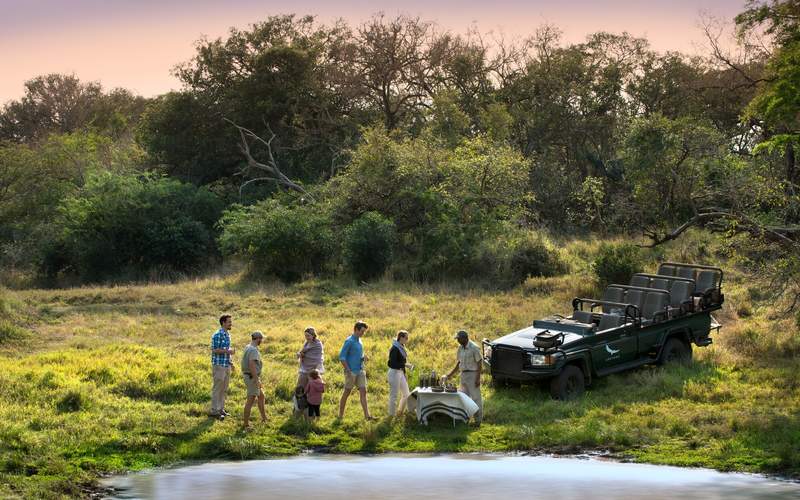
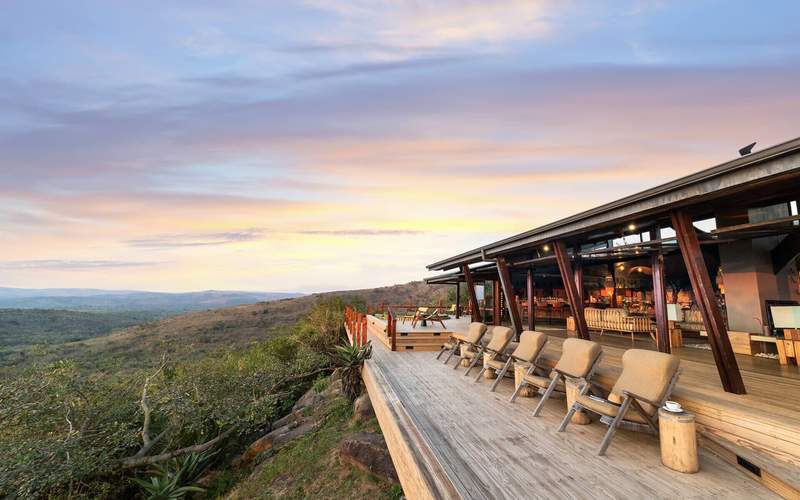
Africa is a large word. STA uses a smaller one: specific. Specific golf courses, specific private game lodges, specific coastal retreats, specific seasons — a considered selection made by people who have been to these places and know the difference between a course that sits near a game reserve and one where the game decides whether you play through.
That selection begins with a form that opens a conversation. Before an itinerary takes shape, we want to know how you play — not your handicap, but how you travel, what you have already seen, what you did not expect to love and did, and what you will not compromise on. The itinerary that follows is shaped by those answers. Two guests with the same destination and the same budget will leave with different journeys.
Every itinerary starts with the golf and works outward. The course sets the geography. The geography determines the lodge. The lodge shapes what happens between rounds. Whether you come to us directly or through a trusted travel partner, the relationship works the same way — once we engage, we become family. Our ecosystem has been built over years on integrity, trust and long-standing relationships across the travel industry.
We built the itineraries before we built the website. That order matters.
Enquiry opens a conversation, not a PDF. If you know what you are looking for, we will know how to find it.
Africa's championship courses — curated for the golfer who plays for the experience, not just the scorecard. Each course on this list can only be played in Africa. That is the point.

Every STA journey begins with a private conversation. A destination expert will respond within 72 hours — no matter where in the world you are.
No other market can make this image.
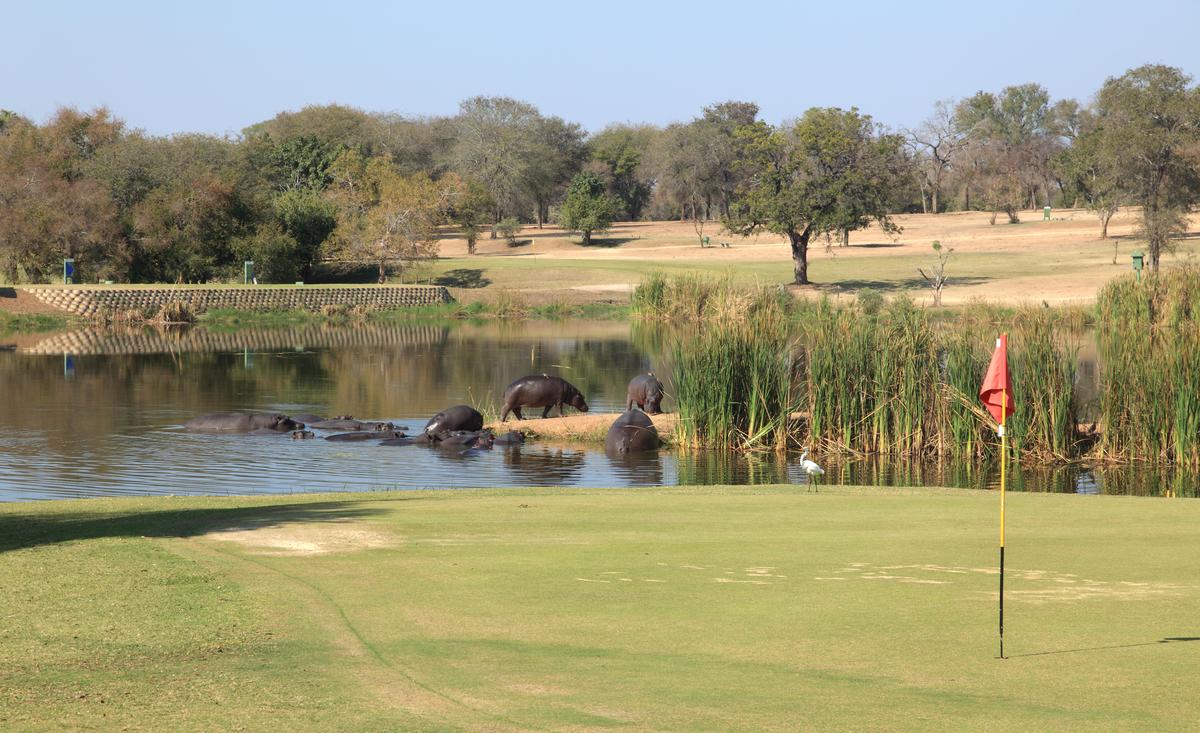
Hippos gathered at the water hazard on a sunlit fairway, entirely unconcerned by the round in progress. The course belongs to both species — Skukuza is where the game of golf yields to the game reserve.
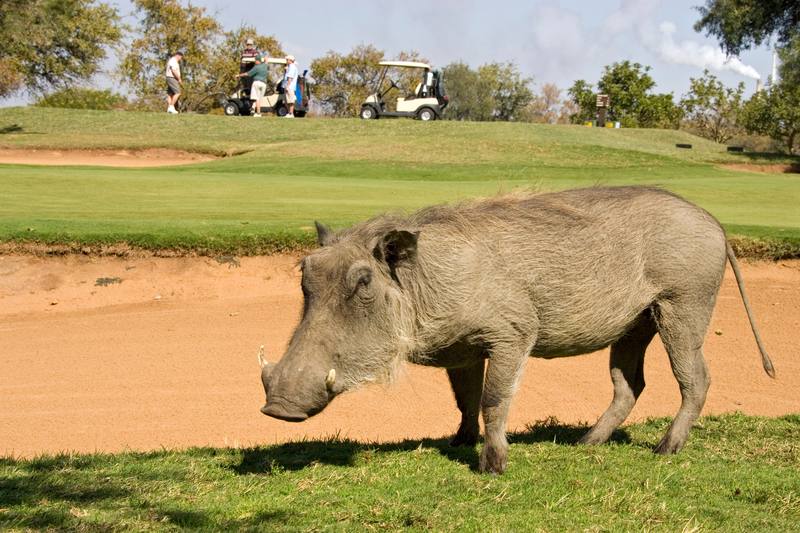
A warthog grazing on the fairway in sharp foreground, golfers rendered soft and secondary behind. Africa given sovereign priority in its own landscape.
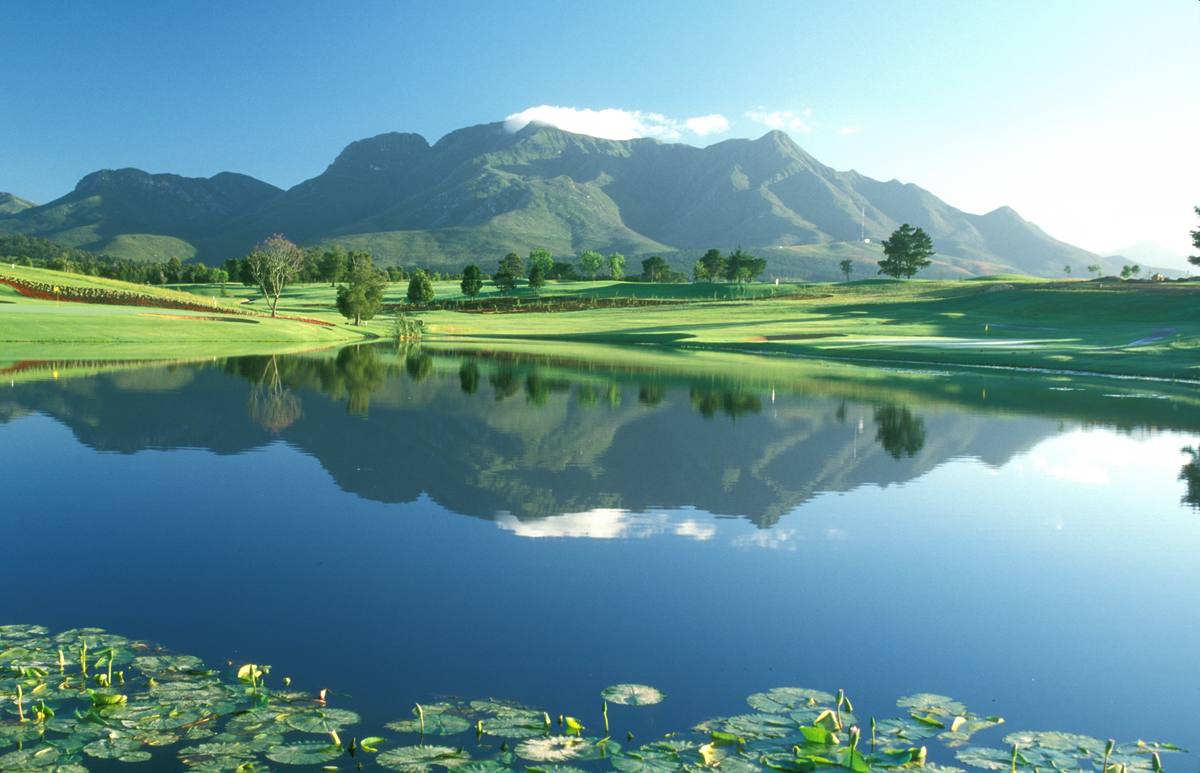
Ranked first in South Africa. Fourteenth in the world. Set against the Outeniqua Mountains.
Gary Player called it his greatest feat as a course designer. Sculpted from a former airfield in collaboration with Phil Jacobs, commissioned by SAP co-founder Dr Hasso Plattner — The Links at Fancourt was modelled on the great links of the British Isles. Firm, fast fairways. Deep revetted bunkers. The Outeniqua Mountains holding the horizon in every direction. Africa's Best Golf Hotel 2025. SA's No. 1 course. World No. 38.
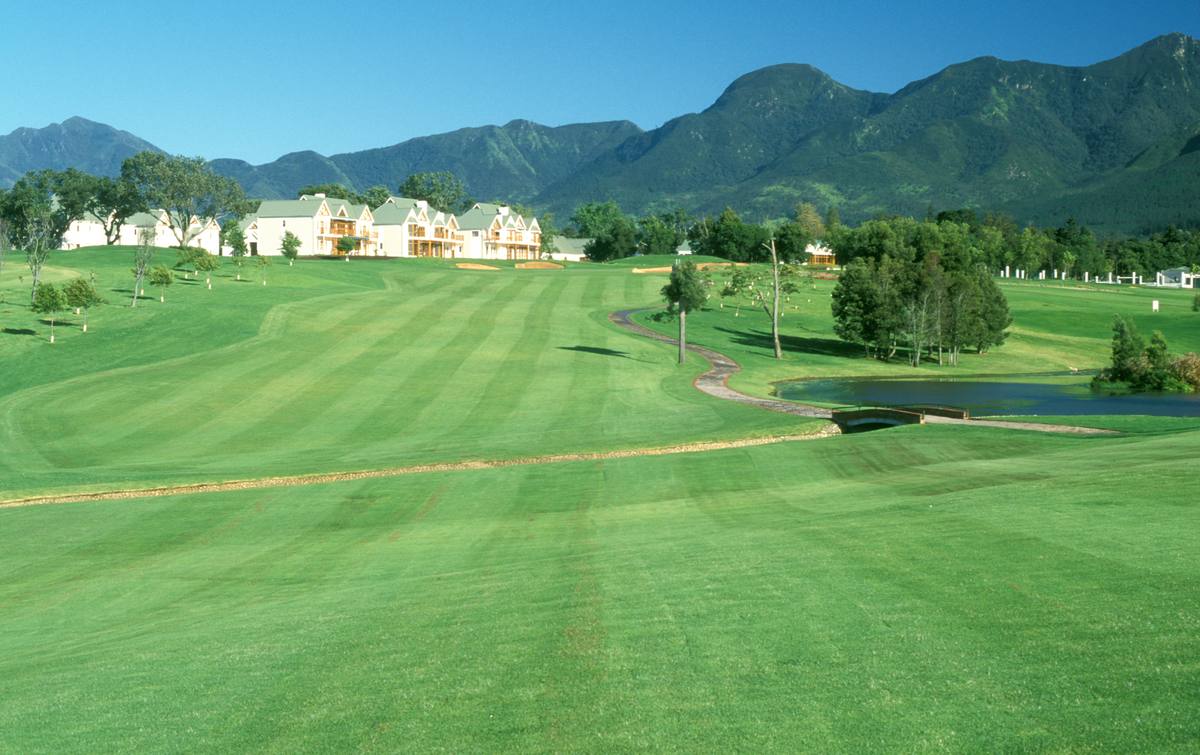
The only African venue to host the Presidents Cup. Tiger Woods and Ernie Els went to sudden death under fading Garden Route light — three extra holes, neither giving. Captains Jack Nicklaus and Gary Player agreed to share the Cup. The only tie in the event's history. The Dimension Data Pro-Am has called Fancourt home since 2010.
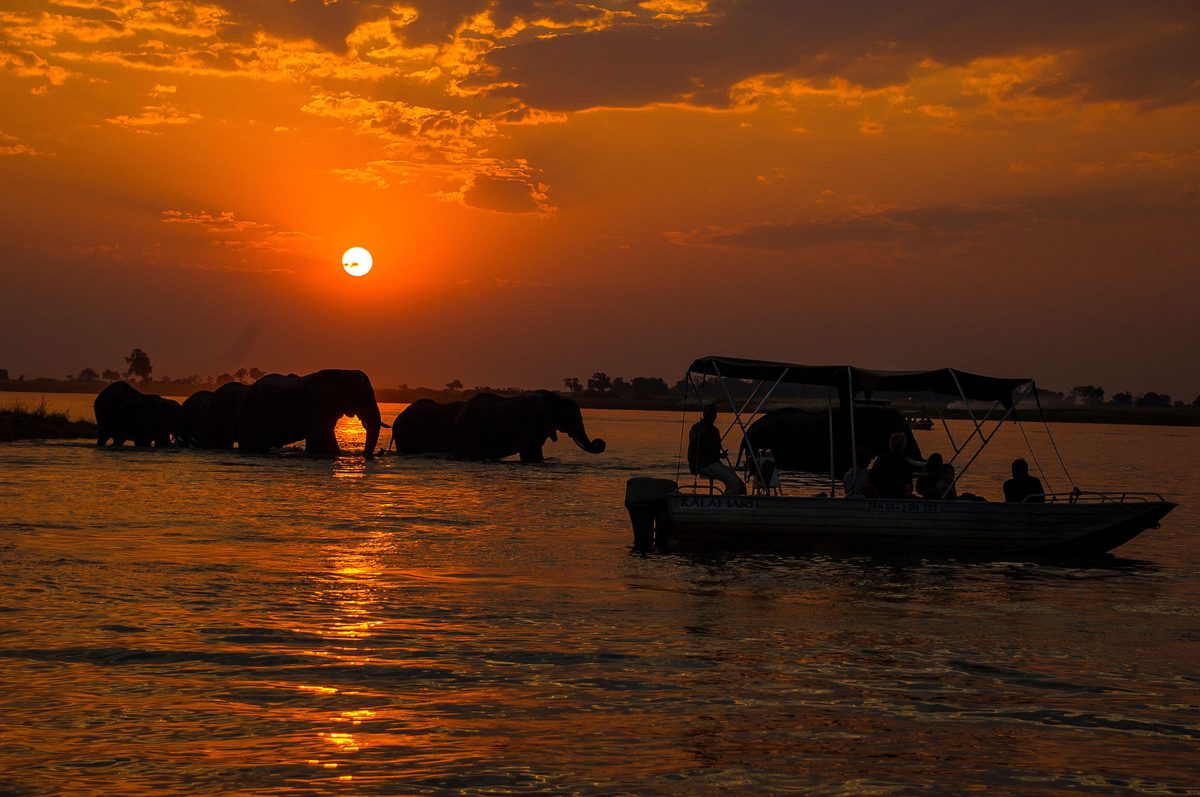
Africa sovereign in its own landscape.
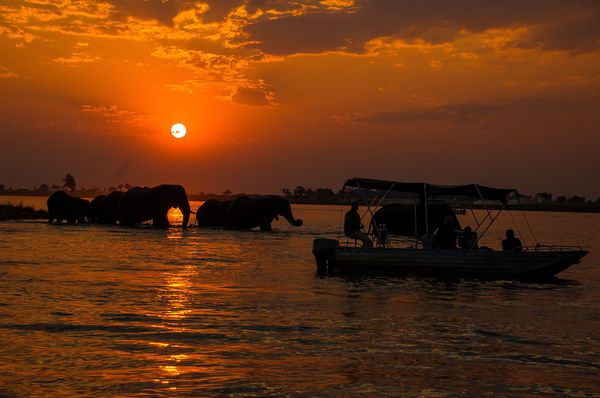
Two flat-bottomed safari boats carrying tourists, positioned in the Chobe River at sunset. An elephant herd crossing in silhouette to the left — bodies submerged, trunks raised. Everything in the frame in silhouette. The viewer is placed in the boat.
Two hot air balloons in sharp silhouette against a deep burnt orange dawn sky, acacia trees forming the lower register. The Serengeti at first light — high contrast, minimal tonal range, maximum compositional clarity.
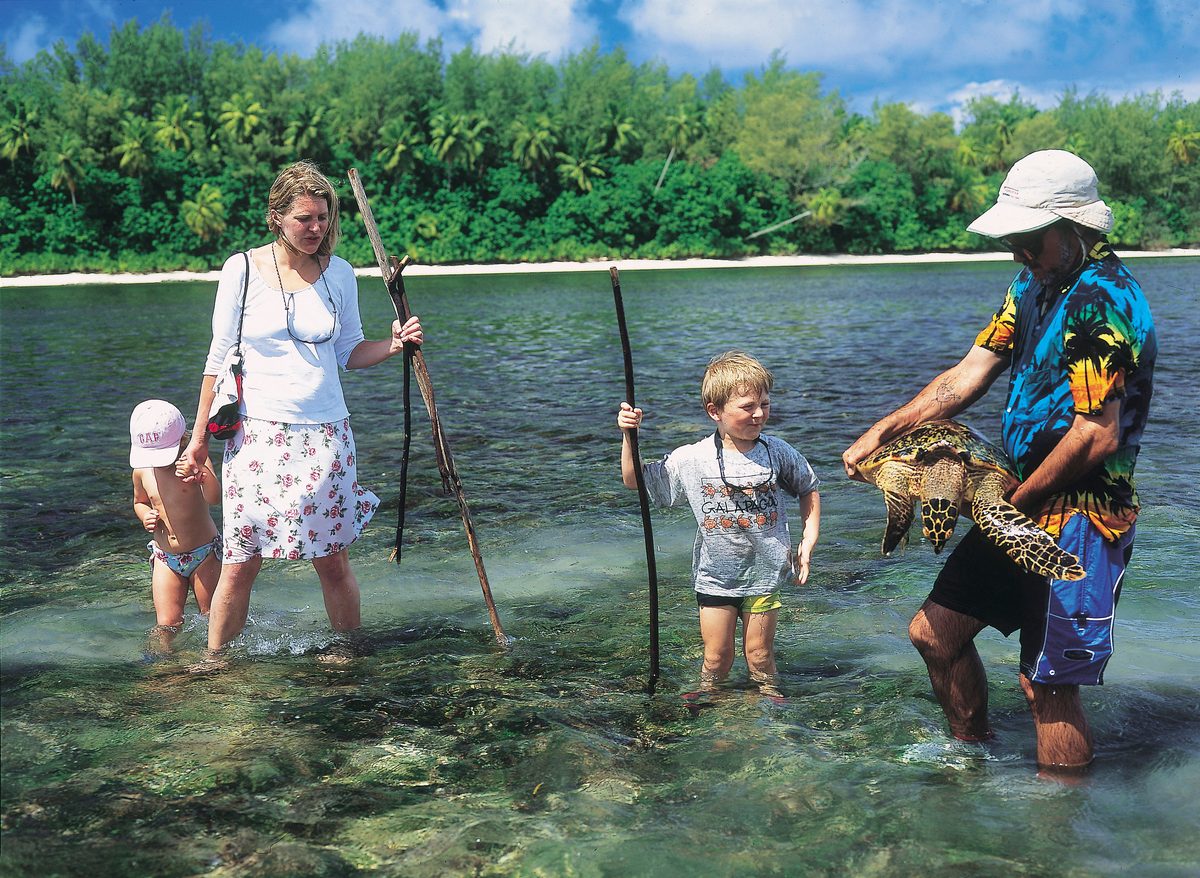
The moments that cannot be replicated at a hotel.
A family group in ankle-deep water at Alphonse Island. A local guide holds a sea turtle at close range, children at the centre of the frame. The shoreline behind them is dense palm forest — nothing else. An encounter that only happens with specialist local guidance.
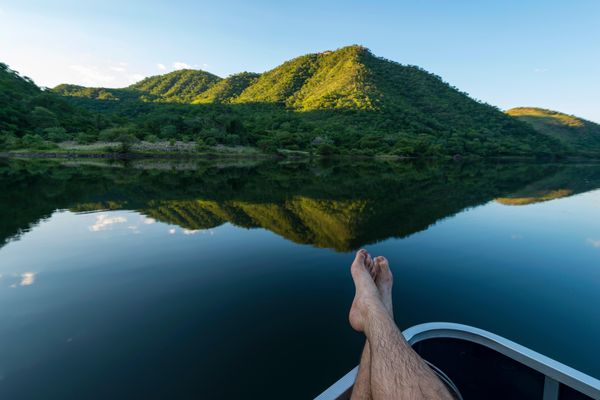
First-person view from the bow of a river boat on the Zambezi, Zimbabwe. Bare male feet resting on the bow rail, the river surface completely still, dense green forested hills reflected in the water. No people, no wildlife, no drama — the quality of doing nothing in a particular place.
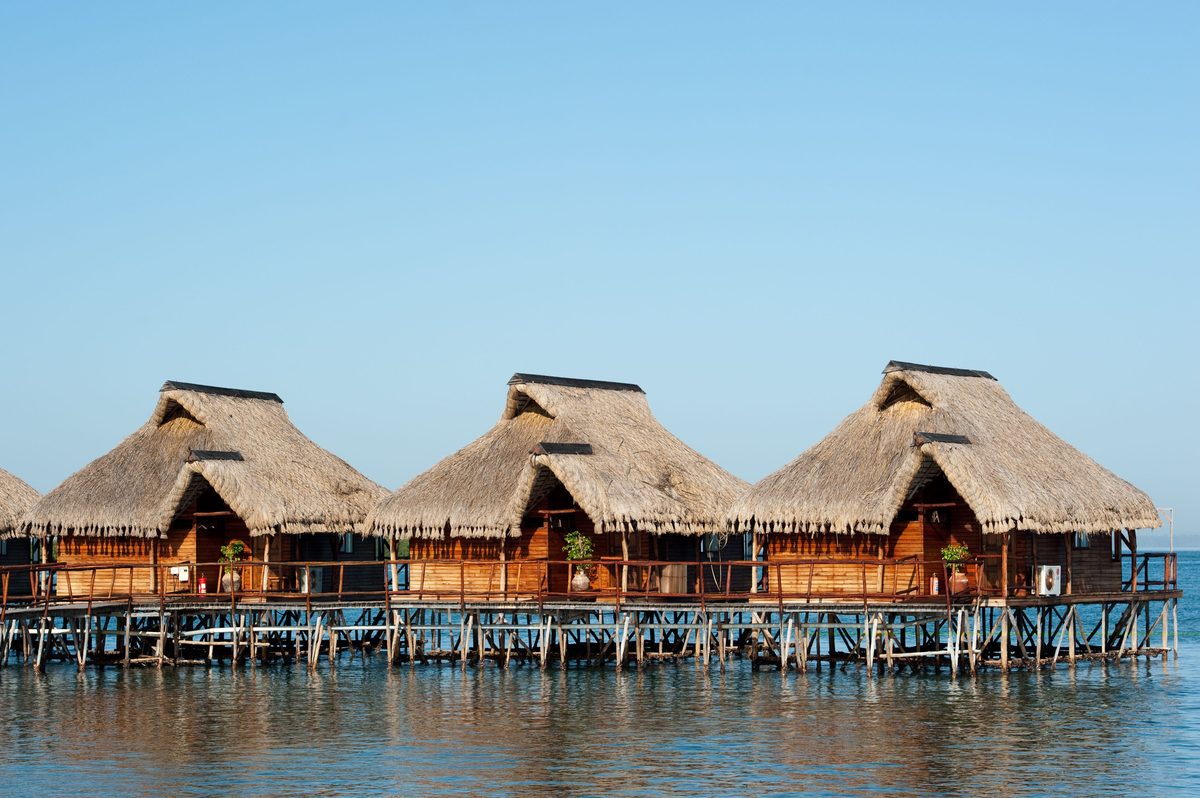
Luxury earned by location, not by décor.
Three over-water thatched bungalows on timber stilts at Flamingo Bay Water Lodge, Barra peninsula, Inhambane Province. The Indian Ocean extending to a flat horizon under clear sky. No other structure visible. Boutique in scale, absolute in position.
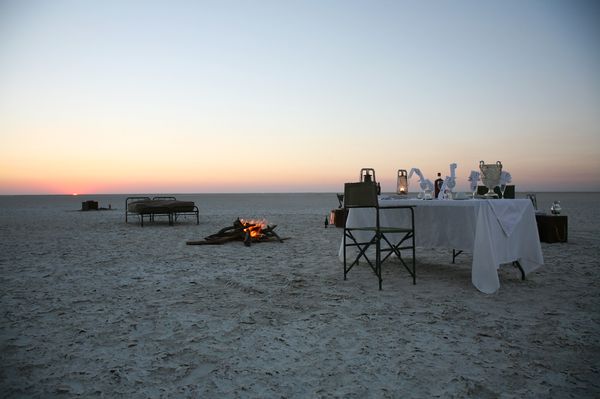
A formally laid dinner table — white linen, set crystal, candles — positioned in the middle of the Makgadikgadi salt pans under a deep blue twilight sky. The infinity of the pan extending to the horizon on all sides. The table is the only object in the landscape.
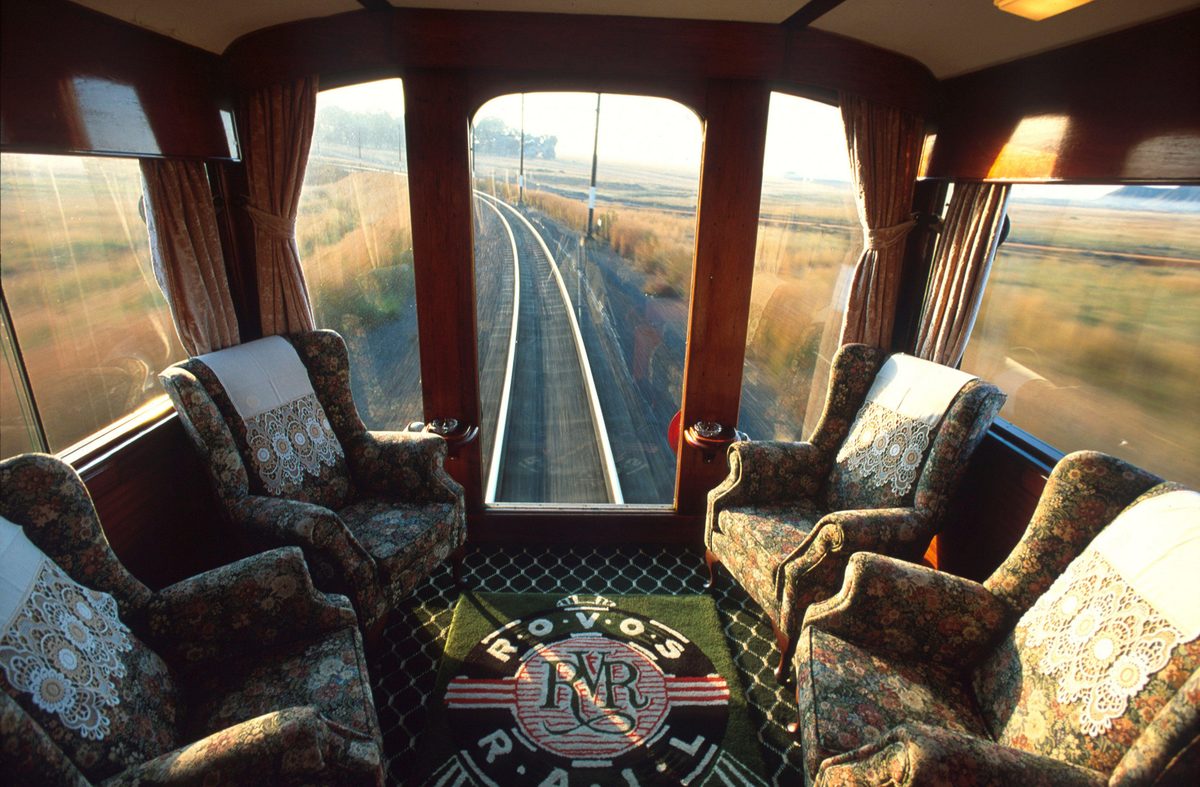
The journey as experience, not transfer.
The rear observation lounge of the Rovos Rail: four wingback armchairs in floral upholstery arranged in front of a panoramic rear window. The track recedes into open South African highveld in morning light. A room that could be an Edwardian drawing room — watching the landscape fall away behind.
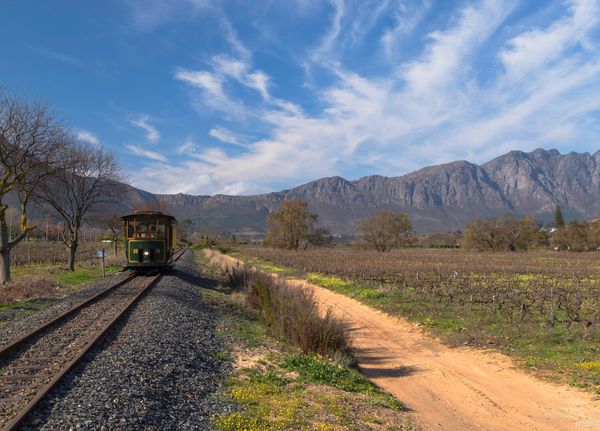
The Franschhoek Wine Tram occupying the left quarter of the frame, small against dormant winter vineyards and the full wall of the Franschhoek Pass mountains behind. The scale relationship correct — a human-made heritage vehicle moving through a landscape that dwarfs it.
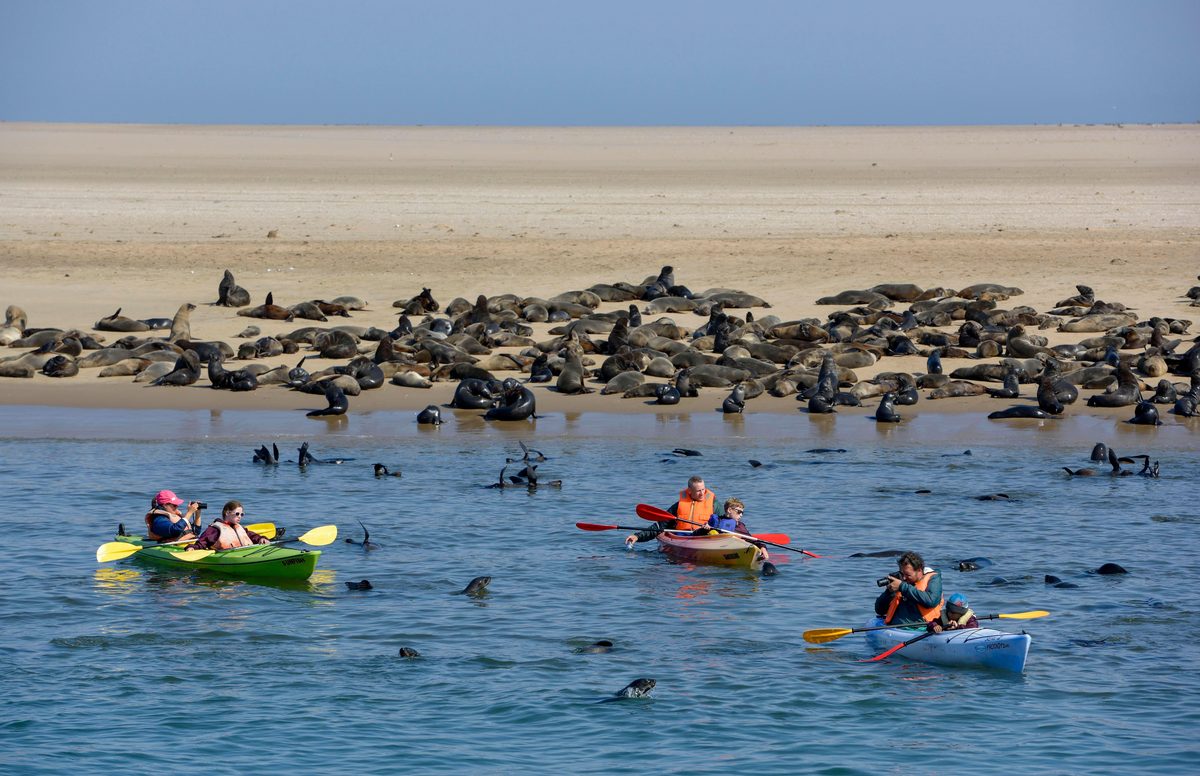
The ocean end of an itinerary that begins inland.
Two kayakers paddling among a colony of Cape fur seals at Walvis Bay, Namibia. The seals are unbothered — surfacing and watching from two metres away, the water flat, the light coastal grey-white. Co-existence at a scale that exists on no other coastline.
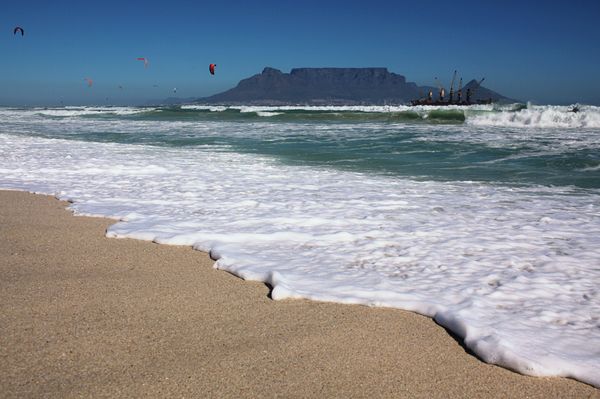
Table Mountain seen from Bloubergstrand across Table Bay — beach wash in the immediate foreground, a partially submerged shipwreck in the middle distance, kite surfers visible in the sky. Three elements that make this a Cape Town image rather than a generic beach photograph.
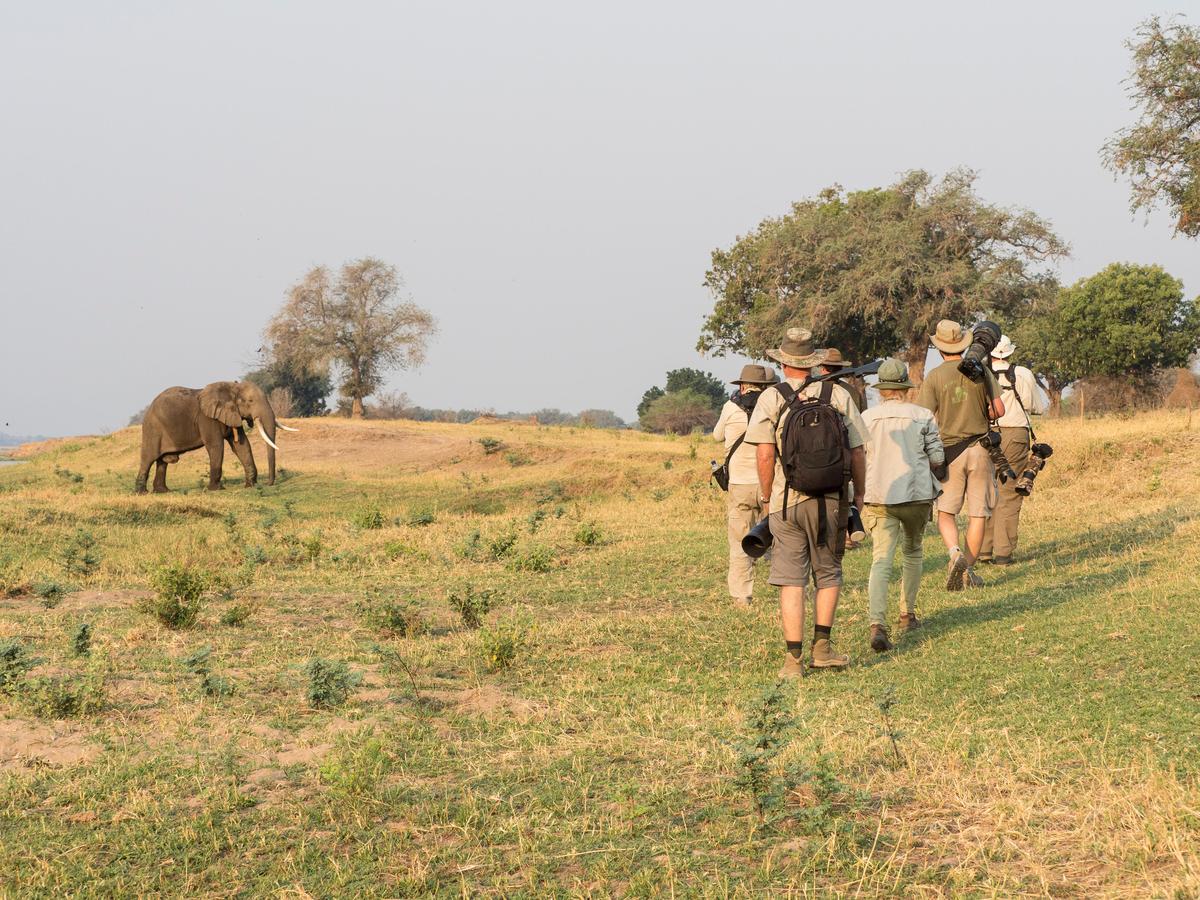
The walking safari where the vehicle disappears.
Walking through a dry floodplain at Mana Pools — an elephant among ana trees at close range, no vehicle in frame. The landscape demands presence on foot.
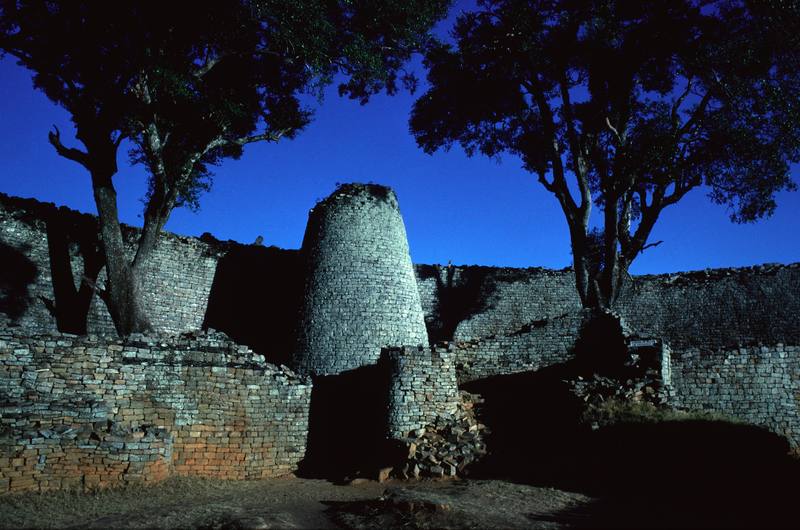
The Main Enclosure of Great Zimbabwe — dry-stone walls built without mortar in the 11th century, still standing. The largest pre-colonial structure in sub-Saharan Africa.
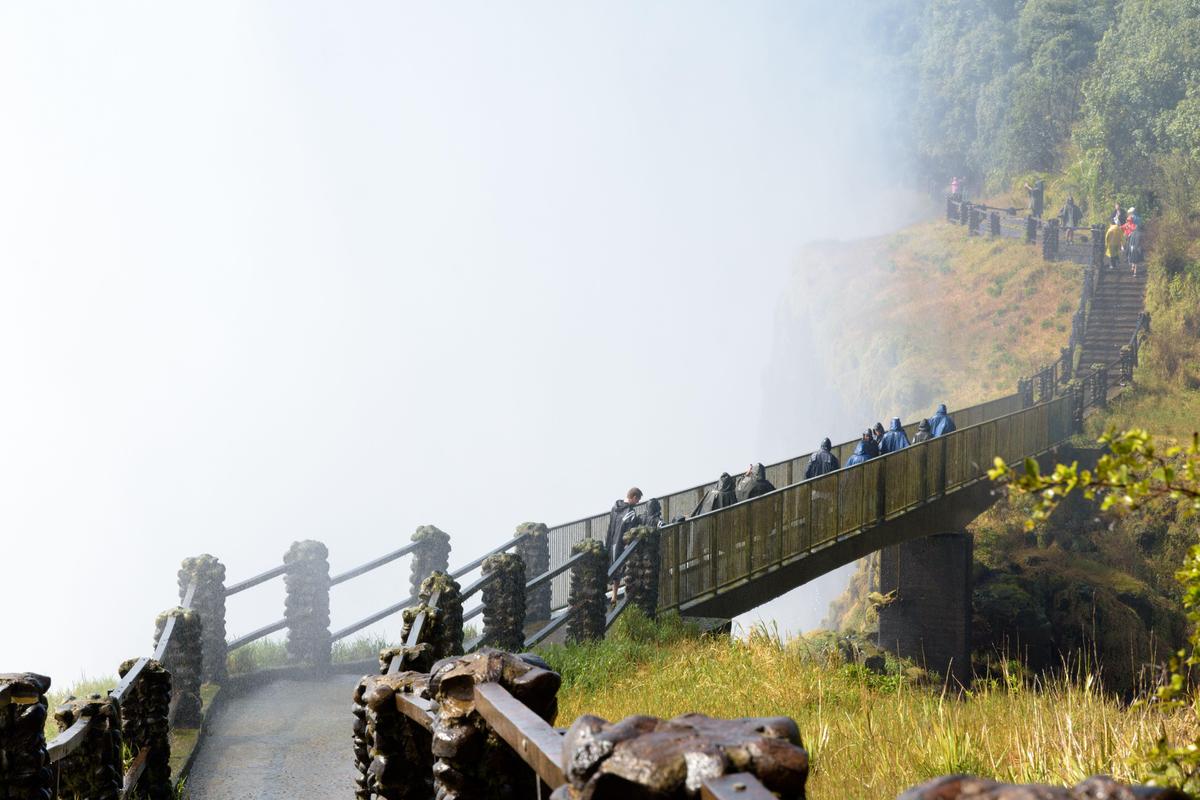
The geological spectacle that no lens fully captures.
Standing on the Knife’s Edge bridge at Victoria Falls — the spray column rising from the gorge, the walkway disappearing into mist. Scale that the frame cannot hold.
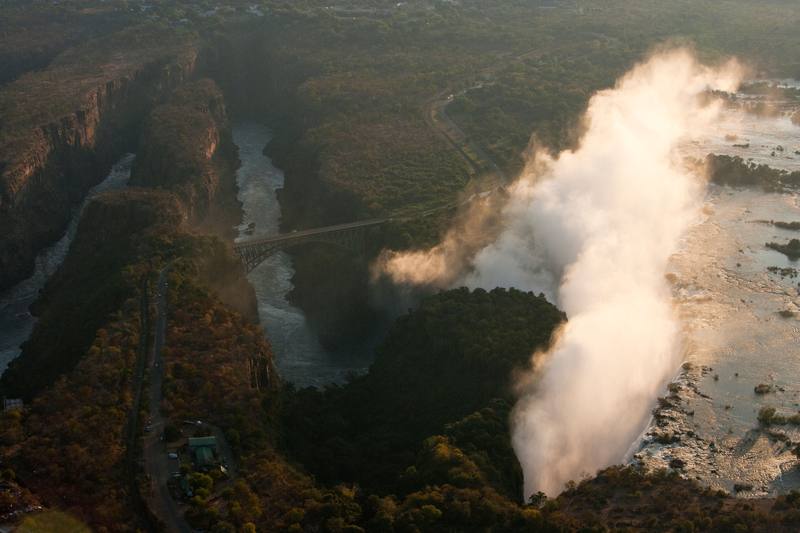
The aerial perspective reveals what the ground conceals — the full width of the falls, the gorge system below, and the bridge connecting two countries across the chasm.
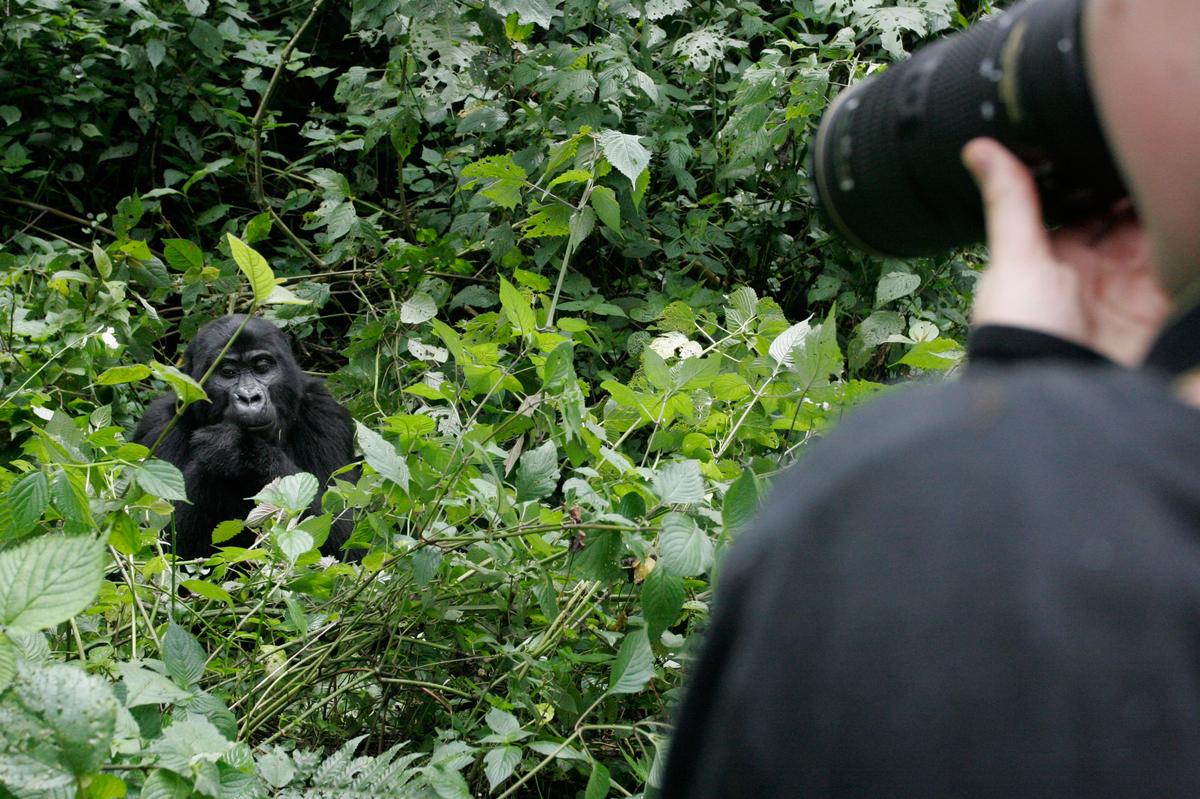
One hour. Arm’s length. No barrier.
A trekker at five metres, photographing a mountain gorilla in bamboo undergrowth — the animal undisturbed, the distance collapsing any pretence of separation between species.
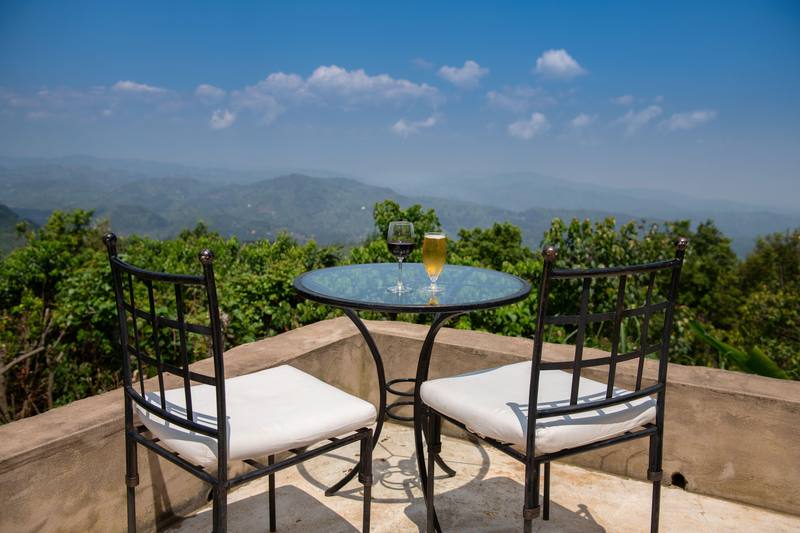
Clouds Mountain Lodge set above the forest canopy — volcanic stone and reclaimed timber, the mist rolling across the terrace at altitude. The gorilla trek starts from the valley below.
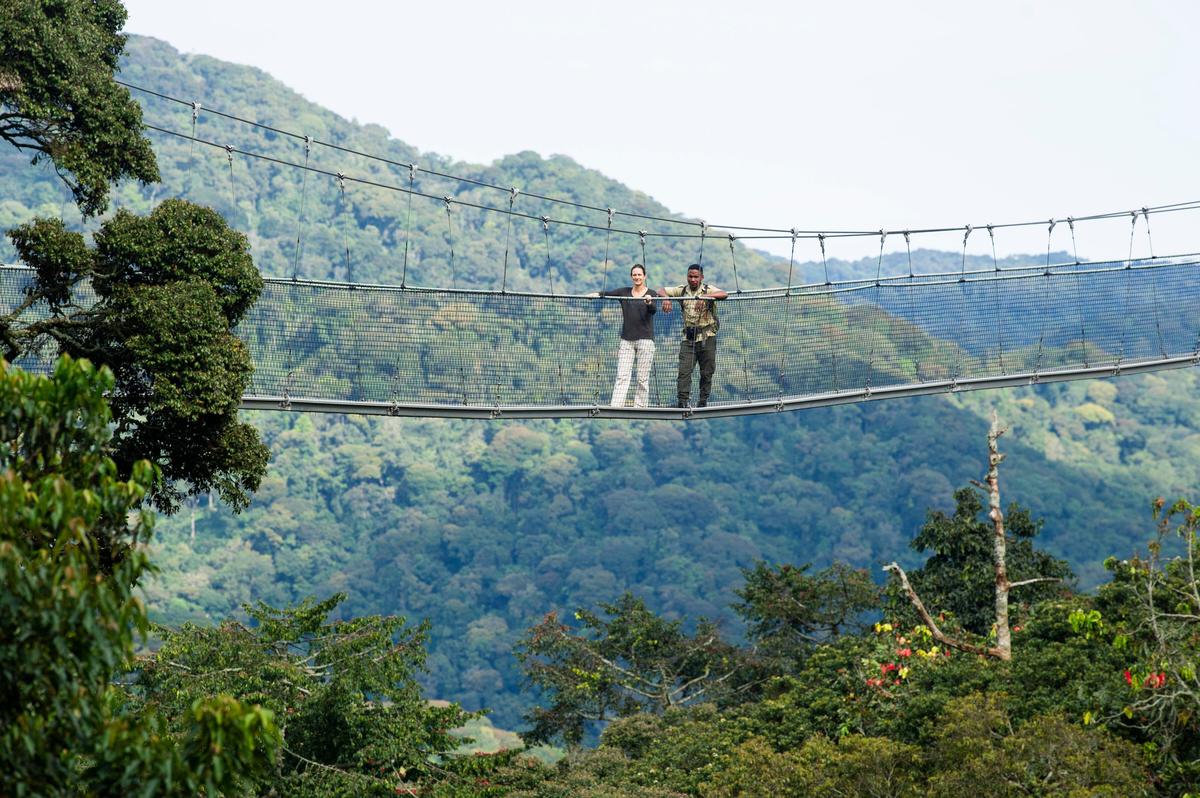
The forest floor is 50 metres below your feet.
The canopy walkway at Nyungwe — a suspension bridge strung between ancient trees at 50 metres above the forest floor. Thirteen primate species inhabit the canopy at eye level.
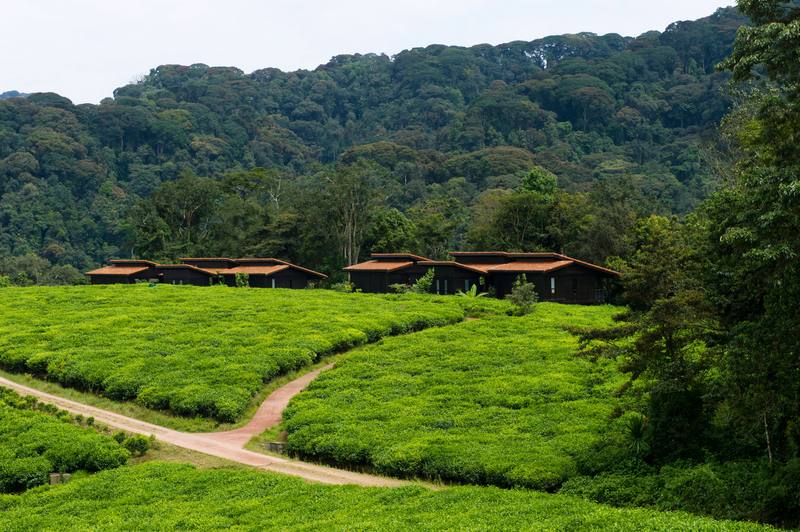
One&Only Nyungwe House set between tea plantations and montane rainforest — the property that places guests at the threshold of Africa’s oldest surviving forest.
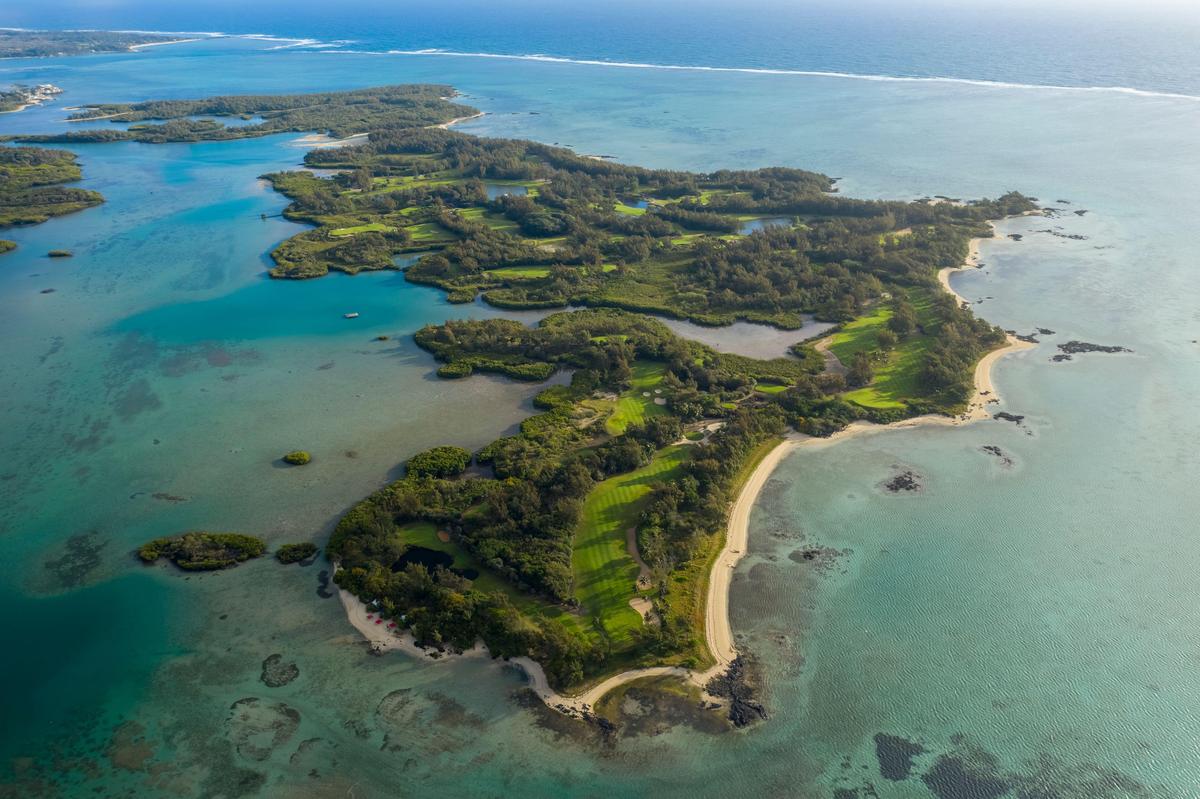
The tee sheet reads like a flight manifest.
Aerial view of Île aux Cerfs — the Bernhard Langer-designed championship course carved into a private island, the turquoise lagoon wrapping around every hole. The only access is by boat.
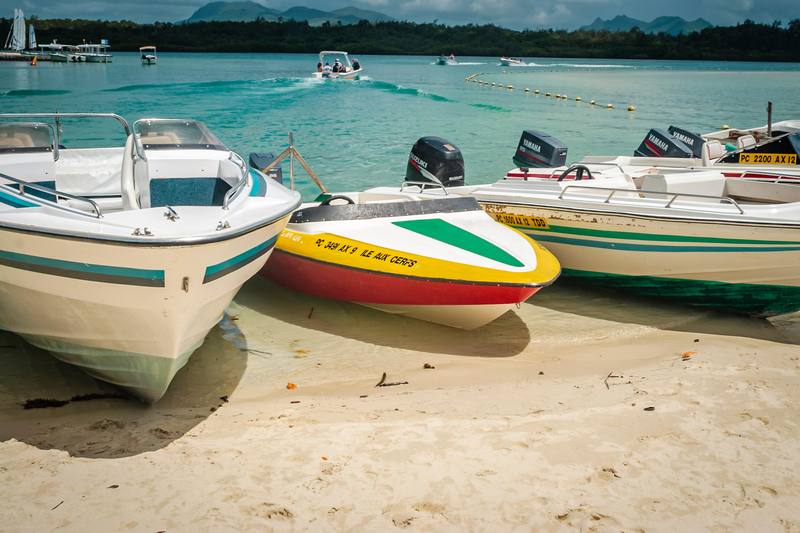
The lagoon at Île aux Cerfs — motorboats moored on white sand, the reef visible through water that gives Mauritius its reputation. The golf course is the reason to come; the island is the reason to stay.
Most golf courses keep nature at a distance. A hedge here, a fence there, a carefully managed water feature stocked with decorative fish. Then there is Skukuza, a nine-hole course inside the Kruger National Park where the decorative fish are Nile crocodiles and the rough is shared with elephants. It is not a golf course near a game reserve. It is a golf course inside one, surrounded by nearly two million hectares of unfenced African bushveld. That distinction changes everything about the way a round unfolds.
Skukuza Golf Club sits on the outskirts of Skukuza Rest Camp, the administrative heart of the Kruger. The course was born in the early 1970s, when a group of park staff who were also keen golfers decided that their home in the bush needed fairways. On 23 October 1971, the founding meeting of the Skukuza Golf Club took place with 19 members present, including five women. A development committee of Nic de Beer, Pieter Steenkamp, and Neels de Jager was elected, and by 1974 the course was playable. There was no clubhouse. There were no bunkers. There were, however, hippos.
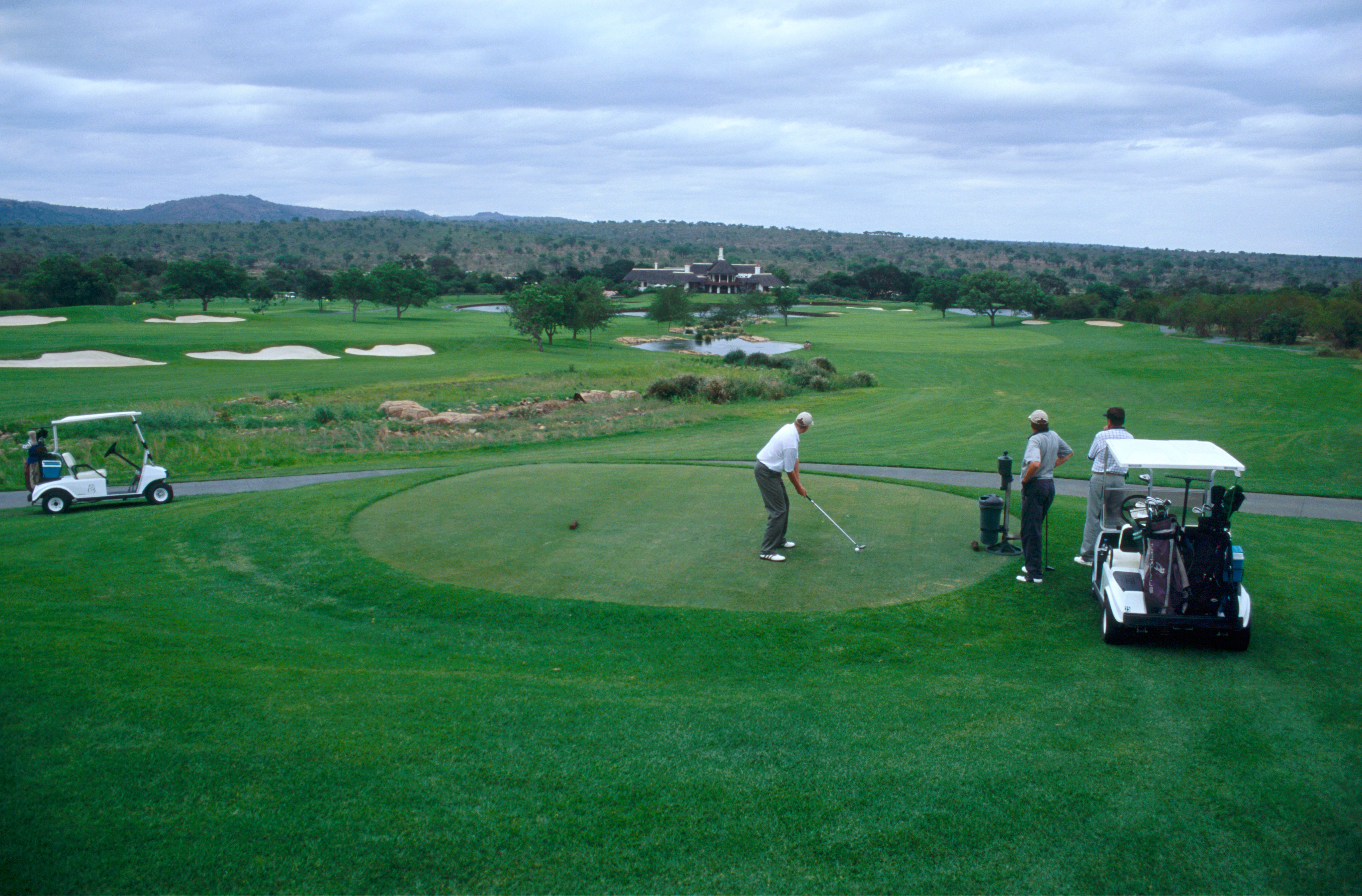
Today the course is a par 72 played over nine holes with 18 tee positions, measuring 5,950 metres from the men's tees and 5,059 metres from the women's. It still has no bunkers. The club's own description refers to "aerial bunkers" instead, meaning the indigenous trees that line every fairway and turn an errant shot into a recovery exercise. What the course does have, in place of sand traps and manicured water hazards, is the full complement of Kruger's resident wildlife.
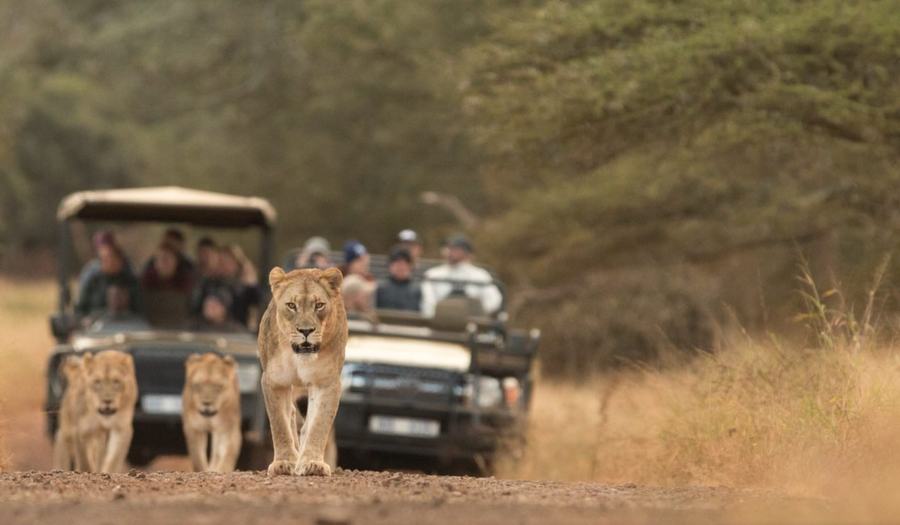
Because there is no perimeter fence, the animals that live in the surrounding bush do not distinguish between the course and the rest of their range. Hippos graze near the fairways. Impala, warthog, and baboons are common enough to be considered permanent gallery. Elephants move through when they choose to. Giraffe have been spotted mid-round. And on occasion, the gallery includes predators: lions have been recorded resting on tee boxes and greens, and hyenas have been seen in the vicinity of a pride's kills on the course.
The signature hole is the ninth, a par three of approximately 150 metres played across Lake Panic. The name is not metaphorical. Lake Panic is a well-known birding destination, but it is also a favoured hunting ground for resident Nile crocodiles. The crocodiles share the lake with a healthy hippo population that typically stays in the water during the day but may venture onto the surrounding grass in winter months when grazing is scarce, or when territorial bulls contest the shallows.
Playing a tee shot over water where crocodiles are visibly present below the surface adds a dimension to club selection that most golfers have not previously experienced. The penalty for finding the water at the ninth is not a lost ball and a drop. It is a lost ball, permanently.
Before the first group tees off each morning, Skukuza's grounds staff drive the course to check for animal presence. CNN reported in December 2023 that nearby holes can be closed while the rest stay open, and that golfers are kept off the course if the team judges it unsafe.
During a round, monitoring continues. Staff patrol the course throughout the day, and golfers are expected to remain aware of their surroundings in a way that goes beyond reading the break on a putt.
“Got a new caddie on the golf course.”Neil Whyte, local golfer, after a hyena followed him for several holes at Skukuza (September 2023)
Several golf courses in Southern Africa border game reserves or share boundaries with conservation land. Leopard Creek Country Club, for example, sits adjacent to the Kruger's southern boundary along the Crocodile River, and players there may encounter hippos and crocodiles. Hans Merensky, further north, is near the Kruger's Phalaborwa Gate. But adjacency is not the same as being inside. Skukuza is the only golf course operating within the boundaries of a major national park on the African continent, subject to the same conservation rules that govern the park itself.
That distinction has practical consequences. SANParks gate times apply. You need to be inside the Kruger to reach the first tee. When an elephant crosses the second fairway, it is not a curated encounter managed for effect. It is an elephant going about its day in its own reserve, indifferent to your four-iron.
Mark Wiltshire Golf reshaped the greens in 2022 and replanted them in Royal Blue cynodon, according to SA Top 100 Courses, and the new greens opened in 2023. The upgrade refines the course while preserving the character that makes Skukuza singular. The founding members understood in 1971 what the redesign confirms: the course does not need to compete with championship layouts on design complexity. Its competition is the experience itself, which no other course on the continent can replicate because no other course exists in the same conditions.
Swing Through Africa curates itineraries where the golf and the landscape are inseparable. Skukuza is the clearest expression of that principle. The course is not a diversion from the safari. It is the safari, played with a bag on your shoulder in the same bush where the Big Five range freely. There is no fence between the eighteenth green and the rest of the Kruger. There is no transition from “the golf part” to “the nature part.” They are the same thing, on the same ground, at the same time.
That is not a tagline. It is a set of playing conditions that exist nowhere else.
Every STA journey begins with a private conversation. Tell us what you are looking for, and a destination expert will respond within 72 hours.
Start your enquiryAnalytics & Dashboard Access
| Page | Sessions | Avg. Time | Bounce % | Enquiries |
|---|---|---|---|---|
| / (Home) | 6 | 1:59 | 67% | — |
| /itinerary/fairways-to-footprints | 0 | — | — | — |
| /itinerary/tee-track-tide | 0 | — | — | — |
| /#gallery | 0 | — | — | — |
| /#why | 0 | — | — | — |
| Name | Itinerary | Travel Window | Travellers | Status |
|---|---|---|---|---|
| HubSpot Forms API connection required to display live enquiries | ||||
| Source | Sessions | Enq. |
|---|---|---|
| visa_partner | — | — |
| durban_direct | — | — |
| turkish_airlines | — | — |
| email_blast | — | — |